Tankless Water Heater Service in Windsor, CO
Descaling, error-code repair and replacement for gas and electric tankless units. The price is explained before work starts.
- Descaling and flushing
- Error code diagnosis
- Gas and electric units
- Replacement when needed
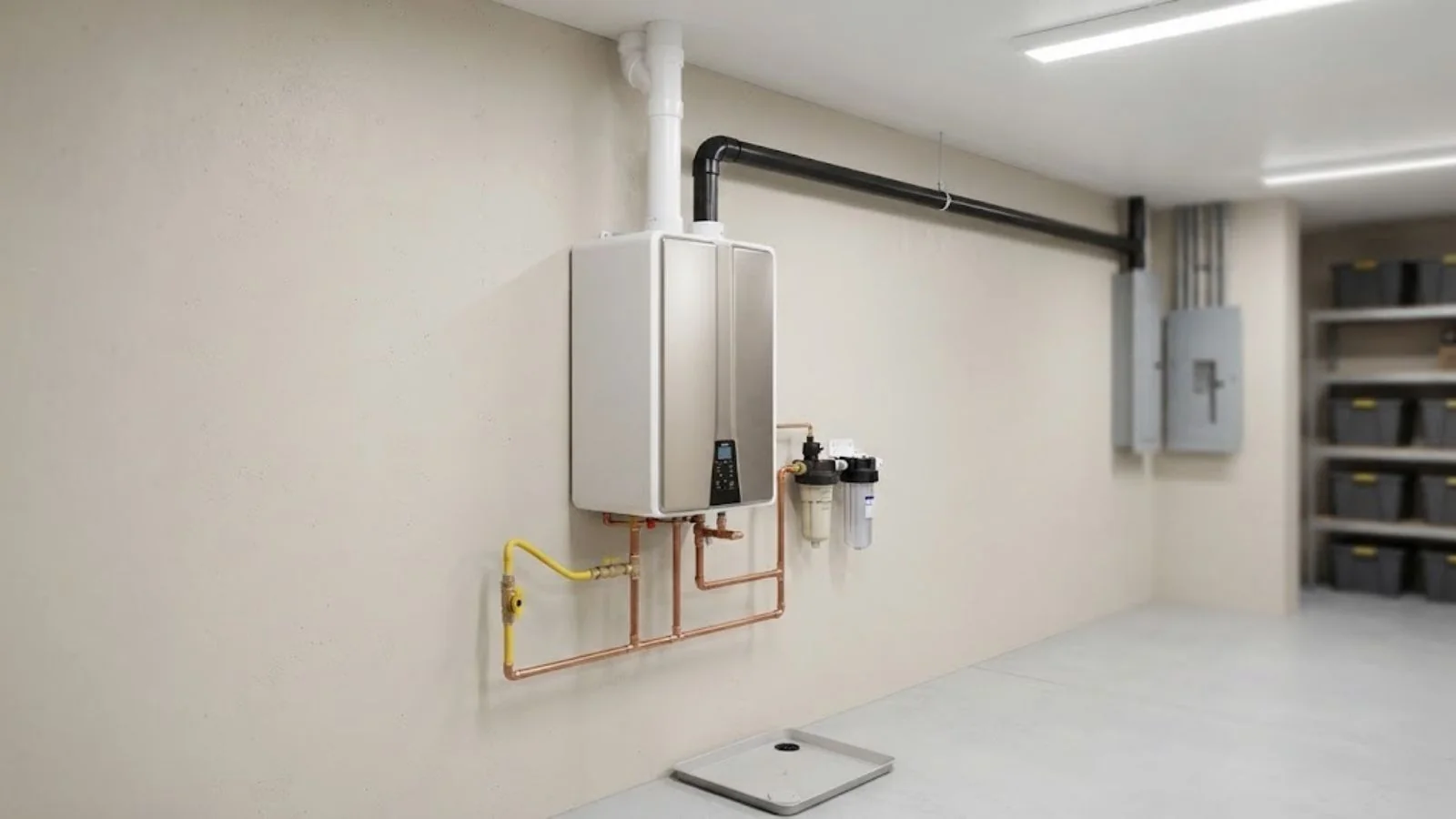
Hot water that runs lukewarm, cuts out, or shows an error code
A tankless heater that delivers lukewarm water, flashes an error code or shuts off mid-shower is usually blocked by mineral scale, starved of gas or air, or reading a failing sensor. Water that is hot for a minute and then cold points to a flow or sensor problem more often than a dead unit.
The fix is called tankless water heater service. It covers descaling the heat exchanger, cleaning the inlet filter, checking venting and gas supply, replacing failed parts, and replacing the whole unit when it is past repair.
What the symptom usually points to
These patterns show up most often. Code meanings vary by manufacturer, so the model number comes first on any call.
| Symptom | Common cause | Typical fix |
|---|---|---|
| Flow slows and water turns lukewarm | Scale on the heat exchanger or a clogged inlet screen | Clean the screen, then flush and descale |
| Error code on the display | Ignition, flame sensor, venting or condensate trouble | Look up the code, then test the part it names |
| Hot, then cold, then hot again | Flow below the unit's minimum, or a faulty sensor | Check flow at the fixture, then test sensors |
| Display is dark, no hot water | No power, tripped breaker, or gas supply off | Check power and the gas valve before parts |
| Rumble or hiss while heating | Scale restricting water flow through the exchanger | Descale and recheck flow |
Gas units add a combustion side. A blocked vent can look like a dead heater, and anything involving the gas supply belongs with gas line installation and repair and not with guesswork. A tank heater showing similar symptoms is a different diagnosis, covered under water heater repair.
How a tankless flush and descale works
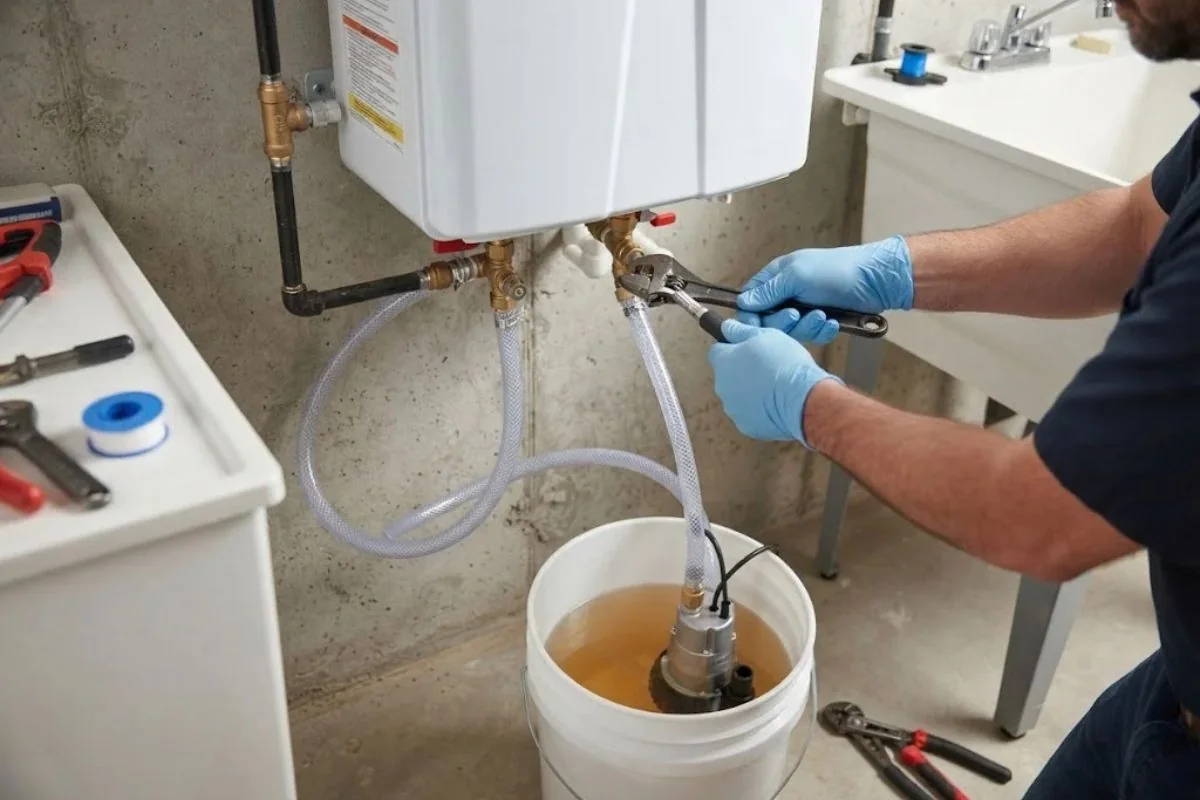
Descaling circulates a mild acid solution through the heat exchanger with a small pump and two hoses. White vinegar and descalers approved by the manufacturer are the common choices, and the hoses connect at the unit's service valves.
- 1
Isolate the unit
Power or gas is shut off and the water supply valves are closed so the loop is sealed.
- 2
Connect the pump and hoses
Hoses attach to the hot and cold service valves and run to a bucket holding the solution.
- 3
Circulate the solution
The pump runs the solution through the exchanger for the time the maker calls for.
- 4
Rinse and clean the screen
Fresh water flushes the loop and the inlet filter is cleaned.
- 5
Restore and test
The unit is restarted, and flow and temperature are checked at a fixture.
Units installed without service valves need them added first. Many homeowners can do a flush, but gas and combustion checks are not a do-it-yourself job.
What to do if a tankless unit smells of gas or leaks
- If you smell gas, leave the house before doing anything else.
- Do not flip switches, use a phone inside or light anything. Call 911 and your gas utility from outside.
- If water is leaking from the unit, close the cold water valve to it and switch the unit off.
- If the display shows an error code and there is no smell, turn the unit off at its control and write the code down.
- Keep the area clear and call the 24/7 line once everyone is safe.
What makes tankless service different in Windsor
Windsor sits at about 4,800 feet of elevation, and gas appliances are set up for altitude. A tankless unit installed with settings meant for lower elevations can short-cycle or throw ignition codes. Checking the altitude setting, where the model has one, is part of any gas tankless diagnosis here.
The water is the other local variable. Windsor's treated water reaches taps through three providers, and hardness can differ by supplier, so ask yours for its figure. Harder water builds scale faster, which is why a unit on harder water earns a shorter flush interval than the manufacturer's default.
Most Windsor homes put the water heater in a basement or utility room, which helps with venting. Condensing models also need a drain for acidic condensate, which a floor drain or a condensate pump and neutralizer can handle.
Installations follow the manufacturer's instructions and the International Plumbing Code (IPC) as adopted in Colorado, and gas piping and venting add the International Fuel Gas Code. That is why a unit that was set up by a previous installer is worth inspecting before parts are replaced.
Tankless units move a lot of gas in a short burst, so the gas line size and the vent material matter. A line sized for a tank heater is often too small, and a vent that does not match the unit can trip error codes. These two items explain many of the callbacks that start with a code on the display.
Scale builds inside the heat exchanger faster where water is harder, and a flush with a descaling solution removes it. Many manufacturers call for a flush about once a year, and the manual gives the interval for your model. The Town of Windsor's water report does not publish a hardness figure, so a test strip is a better guide than a guess.
Condensing models drain acidic condensate that needs a proper drain, and units in a garage or exterior closet need freeze protection. A winter power outage can stop the freeze-protection heater, so a unit in an unheated space deserves a second look before the cold arrives.
Ask whether a recirculation loop is worth adding. Tankless heaters need a minimum flow to fire, so a very low flow from a single faucet can run cold, and a loop shortens the wait for hot water at distant fixtures.
Repair or replace a tankless unit
The Department of Energy puts tankless life at more than 20 years, so age alone rarely settles the question. Parts, repeat failures and the heat exchanger do. A full swap is covered under water heater installation and replacement.
Repair makes sense when
- The unit is well inside a 20-year life
- The problem is scale, a sensor or a single part
- Parts for the model are still available
- Error codes started recently and have not repeated
Replace makes sense when
- The heat exchanger has failed or leaks
- The same codes return after repair
- Parts are discontinued or costs near a new unit
- The unit is at or past 20 years
Lukewarm water right now?
Tell us the model and the code on the display.
What a tankless service call costs depends on
A flush and descale on an accessible unit is a smaller job than a part replacement or a full swap. The price is explained before work starts.
Some manufacturers require documented maintenance to keep a warranty valid. Check your paperwork before the first flush and keep the service record.
Tankless water heater questions from Windsor homeowners
Many manufacturers call for a flush about once a year, and harder water can justify more often. Your manual gives the interval, and a missed flush is a common reason scale builds up.
Codes point to a system such as ignition, venting, flow or a sensor. Meanings differ by brand, so the model number and the code together tell the technician where to start.
Not always. Scale, a clogged inlet screen or low flow at the fixture often explains it, and a flush and descale fixes many of those.
The Town requires a building permit to install or move plumbing, and gas and venting changes can add inspection steps. Ask about permits when you call so the quote includes them.
Usually, but plan for more than a swap. Tankless units draw much more gas than a tank, so gas line size, venting and electrical supply all get checked first.
Yes. The line is answered 24/7, including holidays. A unit that leaks, smells of gas or stops heating in a cold snap is treated as urgent. If you smell gas, leave the house and call 911 first.
Brand and model coverage is confirmed on the call, since parts and codes differ. Have the model number from the label ready. The same service reaches Johnstown, Severance, Timnath, Milliken and Greeley.
Tankless water heater service in Windsor
Describe the symptom and get the price before work starts.
☎ (970) 708-6013