High Water Bill in Windsor, CO: Find Your Provider First
A bigger water bill can mean a leak, a rate change, or a provider you did not expect. Sorting out which comes first saves a plumber visit you may not need.
Which provider actually bills your Windsor home
Windsor does not have a single water provider. The Town of Windsor serves addresses in its Weld County limits, Fort Collins-Loveland Water District serves Windsor residents in Larimer County, and North Weld County Water District serves the Harmony Ridge and Alexander Estates subdivisions. The letterhead on your bill tells you which one is yours, and each handles meters, rates and leak questions its own way.
The Town buys the water it sells. Its 2025 water quality report says about 30 percent comes from the City of Greeley and about 70 percent from Fort Collins-Loveland Water District and North Weld County Water District together. That does not change who bills you, but it explains why several agencies appear in the paperwork.
Did the rate change, or did your use change
The Town raised its water, sewer and stormwater rates on February 1, 2026 to fund a wastewater plant replacement and a water line replacement on 15th Street. A higher bill this year, with the same use, is a rate story and not a leak. Compare gallons used, not dollars, against the same month last year.
The Town bills a monthly base fee plus consumption by tier, and bills are due on the 20th of each month. Because use is billed in tiers, a modest rise in gallons can push part of the bill into a higher tier, so a small leak can cost more than its size suggests.
What a bill jump usually means
| Pattern | Likely cause | What to check |
|---|---|---|
| Higher dollars, same gallons | A rate change | Compare gallons with the same month last year |
| Higher gallons in summer only | Irrigation season or a leaking sprinkler zone | Run each zone and watch the meter |
| Higher gallons every month | A running toilet or a slow supply leak | Dye test and a meter test |
| Gallons climb for weeks, then drop | A leak that was found or stopped | Ask your provider for daily reads |
| Meter moves with everything off | A leak after the meter | Close the main shutoff and watch again |
A 30-minute leak test you can do yourself
- Turn off every fixture, the dishwasher, the washer and the ice maker.
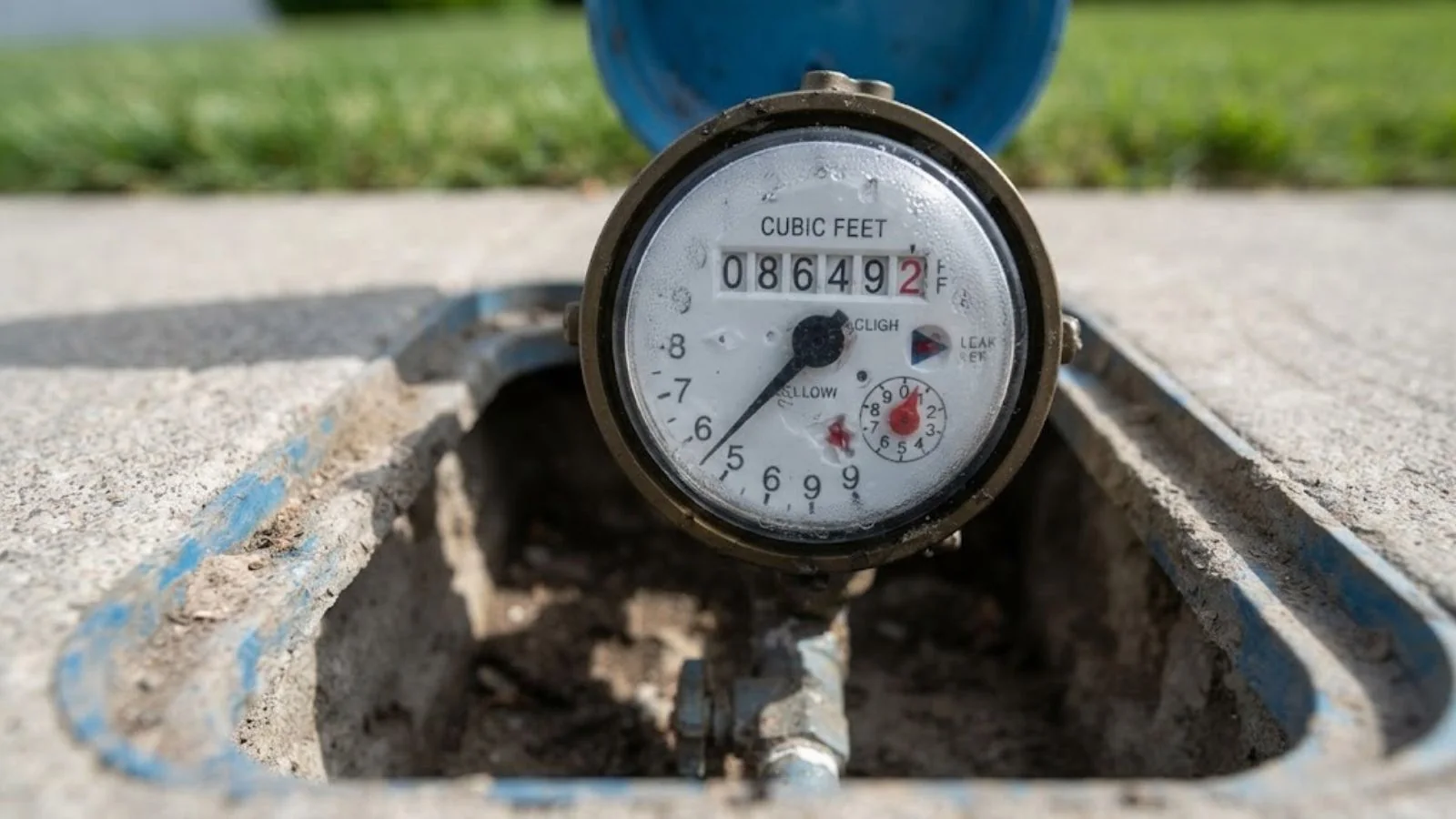
- Read the meter, including the small leak indicator if there is one, and note the digits.
- Wait 30 minutes with no water used, then read it again.
- If the number moved, close the main shutoff at the house and watch the meter once more.
- A meter that stops after the shutoff means the leak is inside the house. One that keeps moving means the leak is on the line before the shutoff.
What the meter and the provider can tell you
The Town reports more than 10,000 electronic water meters. Electronic meters record use over time, so ask your provider whether it can show daily or hourly use history. A steady draw at 3 a.m. when everyone is asleep is the signature of a leak.
The meter is also the dividing line. A leak between the meter and the house is on your side, and a leak in the street belongs to the provider. For a leak or break in the Town's water system, the Town's after-hours line is 970-674-5415. Leaks on your side are found with leak detection, and a confirmed break in the line to the house is a water line repair or replacement job.
The quiet culprit: a toilet that leaks
The International Plumbing Code (IPC) caps new toilets at 1.6 gallons per flush. The EPA reports that a leaking one can waste about 200 gallons a day, and that the average household's leaks can add up to nearly 10,000 gallons a year. About one home in ten has leaks wasting 90 gallons or more per day. Those numbers explain why a modest bill creep, with no obvious cause, so often turns out to be a flapper.
A flapper that no longer seals lets water trickle from the tank to the bowl, and the fill valve tops it up again. Nothing is visible, and the sound is faint. The dye test in the list above finds it in fifteen minutes, and the part costs very little. A leak check at the meter is quick and separates a leak from a higher rate.
Questions to put to your provider
- Are the reads on my bill actual or estimated?
- Can I see daily or hourly use history for the last 30 days?
- Do you have a leak adjustment policy, and what proof do you need?
- What are the current tiers, and when did the last rate change take effect?
- Who is responsible for the line between the meter and my house?
When the bill is based on an estimated read
A bill built on an estimated read can swing the other way when an actual read arrives, and the swing looks like a leak. Check whether each read on your bill is labeled actual or estimated. A catch-up bill after several estimates is a billing event, not a plumbing problem.
Take your own meter photo on the same day each month for a few months. Dated photos give you a record that no estimate can argue with, and they make a leak jump obvious the month it starts.
Irrigation, and the non-potable twist
Summer is the usual season for a surprise bill. A sprinkler zone with a cracked head can run for weeks unseen. In many newer subdivisions, irrigation comes from a separate non-potable system run by an HOA or metro district, and the Town does not switch those on or off. If your community has one, a summer spike on your potable bill deserves a question to the HOA about whether the lines are connected correctly.
Fort Collins-Loveland Water District also serves parts of Timnath, where many subdivisions are newer, so the same checks apply there.
Quick answers
Meters show digits like an odometer, plus a small dial or triangle that spins with any flow. Read the digits, wait, and read again.
Policies differ by provider. Ask yours whether it offers a leak adjustment and what proof it wants, such as a plumber's invoice.
Do the 30-minute test first. If the meter moves with everything off, the plumber visit is justified.
Then the use is happening when water is running. Check irrigation, toilets and the water heater relief valve discharge, and compare gallons month to month.
Water bill still too high?
If the meter moves with everything off, call and we will find the leak.
☎ (970) 708-6013