Do Windsor, CO Homes Need a Water Softener? Check First
Hardness is the one number that decides whether a softener makes sense, and the numbers online for this area do not agree with each other.
Why the answer is a number, not an opinion
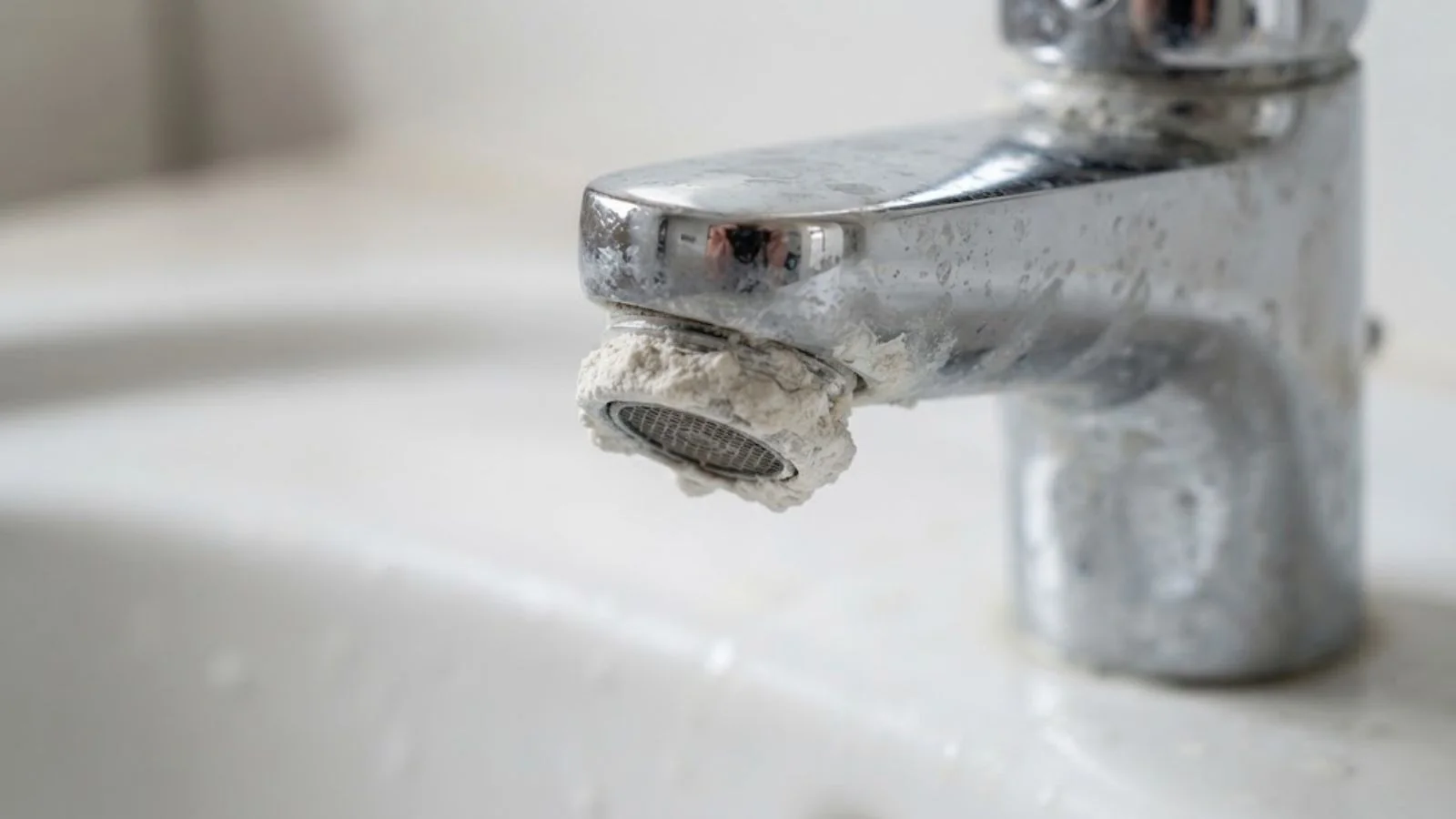
Hardness is dissolved calcium and magnesium. It leaves scale in water heaters and on fixtures, and it makes soap less effective. The Water Quality Association calls water soft up to about 3.5 grains per gallon, moderate to about 7, hard to about 10.5, and very hard beyond that.
Whether a Windsor household needs a softener depends where its water lands on that scale, and that is easy to measure. A simple test strip or a lab report gives the number.
Why published figures for this area disagree
The Town of Windsor's 2025 water quality report does not list hardness. The Town buys its water from three suppliers, about 30 percent from the City of Greeley and about 70 percent from Fort Collins-Loveland Water District and North Weld County Water District, so the figure at a given tap can reflect a blend.
Third-party pages are all over the place. Vendor pages we reviewed gave Greeley figures ranging from about 7 to more than 18 grains per gallon. At least one public aggregator lists Windsor water in the soft range, around 30 milligrams per liter, or under 2 grains per gallon, but treat that as a hint and not a measurement.
What each range means for a home
| Range (grains per gallon) | Class | What to do |
|---|---|---|
| 0 to 3.5 | Soft | No softener needed; flush the water heater on schedule |
| 3.5 to 7 | Moderate | A softener is optional; scale builds slowly |
| 7 to 10.5 | Hard | A softener is often worthwhile, especially with a tankless heater |
| Over 10.5 | Very hard | A softener is usually recommended |
How to get a reliable hardness figure
- 1
Ask your provider
Call the Town of Windsor, Fort Collins-Loveland Water District or North Weld County Water District and ask for the current hardness.
- 2
Use test strips
Hardness test strips from a hardware store give a rough reading in minutes.
- 3
Use a lab test
A certified lab test gives a precise figure, and it can also test for iron.
- 4
Convert correctly
One grain per gallon is about 17.1 milligrams per liter.
- 5
Look at your own evidence
White crust on fixtures, spotty glasses and a quickly scaled kettle are the clues.
Softener or something else
Softeners also add sodium to the water. People on sodium-restricted diets should ask a doctor. For other water concerns the pages on water softener installation and repair and water filtration installation explain the options.
A softener fits when
- The test shows hard or very hard water
- You have a tankless heater
- Scale on fixtures bothers you
- You can handle salt and brine drainage
Something else fits when
- The test shows soft water
- The issue is taste or chlorine, which a filter solves
- Lead is the concern, where a certified filter is the tool
- You only want less scale on a water heater, where a flush helps
Alternatives to a salt softener
Some systems claim to reduce scale without removing hardness minerals. Template-assisted crystallization units turn dissolved minerals into small crystals that scale less readily, and scale inhibitors do something similar. They avoid brine and salt, and they do not soften the water. Results vary, and they are no substitute for a softener if the goal is soft-water feel.
A water heater flush and a tankless descale are the low-cost alternatives for the one place scale does most damage. For moderate hardness, they are often enough.
Practical points before you buy
The International Plumbing Code (IPC) requires a softener drain to discharge through an air gap. A softener needs a drain for brine, an outlet, and a place for a salt bin. Some HOAs and municipalities limit brine discharge, so ask first. Potassium salt avoids adding sodium but costs more. A softener installed on a bypass lets you use unsoftened water for outdoor taps, and a plumber can set that up.
A softener is plumbing work, and the Town of Windsor requires a building permit to install or move plumbing, so ask what applies. A test result that shows soft water means you can skip all of this.
Maintaining a softener once it is in
Check the salt monthly and keep the tank at least a quarter full. Break up any salt bridge, a hard crust that forms above empty space. Clean the brine tank once a year, and every few years have the resin and valve checked. A softener that quits softening has usually run out of salt or developed a stuck valve.
Choose salt as the manual directs. Pellets and crystals both work, and potassium chloride avoids sodium at a higher price.
How a softener is sized
Sizing starts from the household's daily water use and the measured hardness. Multiply the number of people by a typical daily use, and multiply that by the hardness in grains per gallon, to find the grains to remove per day. The unit's capacity, divided by that number, gives the days between regenerations.
An oversized unit regenerates less often and may waste salt, and an undersized one regenerates constantly. A test result and an honest conversation with the installer set the size correctly.
What this means in practice
Test before you buy, and compare what a salesperson says to your own numbers. An honest installer will sell a softener only if the test supports one. Homeowners in Greeley and other towns served by different suppliers can get a different answer than a neighbor in another town, which is why the figure for your address is the only one that counts.
Quick answers
The Town's report does not say, and published figures conflict. Test your tap or ask your supplier.
No. They exchange hardness minerals for sodium or potassium. Chlorine and lead need filtration.
That is possible in some setups, but a whole-home unit is the usual choice. A plumber can advise.
It depends on the unit and the hardness. Check the salt level monthly.
Not sure about your water?
Call and we will start with a hardness test, not a sales pitch.
☎ (970) 708-6013