Water Heater Flush Schedule for Colorado Homes, Step by Step
A yearly flush slows sediment and gives you an early look at the tank's condition. It is simple, but it needs a few safety steps in the right order.
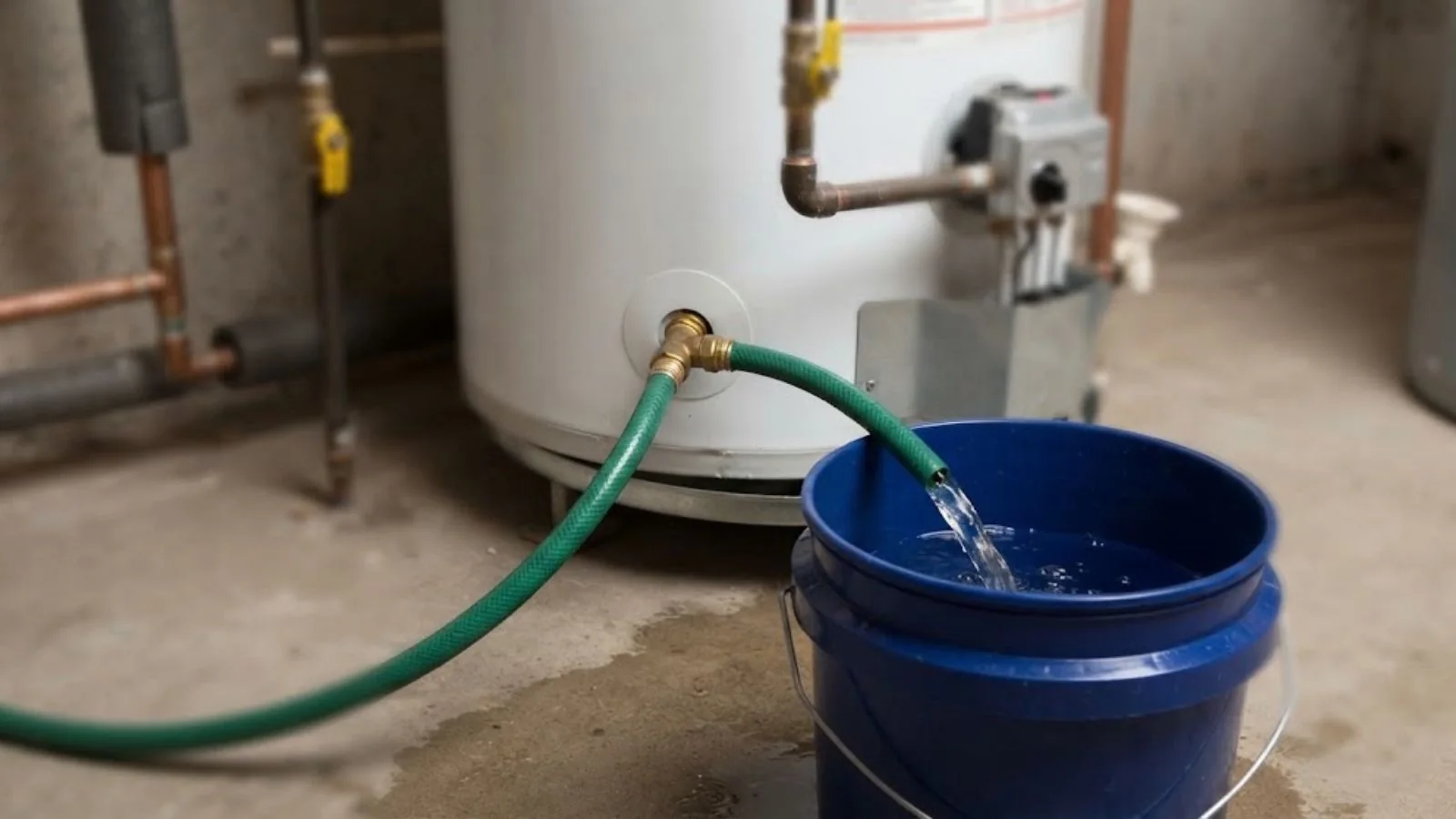
What flushing does
Sediment settles on the floor of a tank heater over time. It insulates the water from the burner or element, makes popping and rumbling noises, and speeds wear. Flushing carries some of that sediment out through the drain valve.
How fast sediment builds depends on the water. The Town of Windsor's report does not publish hardness, and the Town buys water from three suppliers, so the safest schedule is a yearly flush and an adjustment based on what comes out.
A flush and maintenance schedule
| Task | How often | Why |
|---|---|---|
| Quick drain of a few gallons | Every 3 to 6 months if you like | Checks for sediment and keeps the valve working |
| Full tank flush | About once a year | Removes settled sediment |
| Test the relief valve | Once a year, carefully | Confirms the safety valve moves |
| Inspect the anode rod | Every few years | A spent rod lets the tank corrode |
| Tankless descale | About once a year, or per the manual | Clears scale from the heat exchanger |
How to flush a tank water heater
Fill the tank completely before restoring power. An electric element turned on dry can burn out in seconds.
- 1
Turn off the power or gas
For electric units, switch off the breaker. For gas units, turn the control to pilot or off.
- 2
Let the water cool
Hot water scalds. Wait an hour or two, or run hot water elsewhere until it cools.
- 3
Connect a hose
Attach a garden hose to the drain valve and run it to a floor drain or outdoors.
- 4
Open the valve and a hot faucet
Opening a hot faucet upstairs lets air in so the tank drains. Watch the water for grit.
- 5
Flush and close
Briefly open the cold inlet to stir sediment, drain until the water runs clear, close the valve, refill the tank fully, and then restore power or gas.
When to stop and call a plumber
- The drain valve will not open, or it leaks after closing.
- The water runs rust-colored or full of chunks.
- The relief valve discharge drips or the tank body is wet.
- There is a gas smell. Leave the house and call 911 first.
- The tank is more than 10 to 15 years old and already noisy.
The temperature setting is part of maintenance
The Department of Energy suggests setting the thermostat at 120 degrees Fahrenheit for most households. That limits scald risk and standby heat loss. If the dial is higher, lower it after a flush when the tank is full.
A heater that fails a flush may be at the end of its life. Problems found during a flush are covered by water heater repair, and a tank past its age is a replacement question for water heater installation and replacement.
The anode rod, the quiet protector
An anode rod hangs inside the tank and corrodes in place of the steel. It is made of magnesium or aluminum, and it wears down over years. A rod that is nearly gone lets the tank begin to rust, which is a leading reason tanks fail early.
Many plumbers check the rod every few years. Replacing a spent rod can extend a tank's life, though a tank already rusting inside is past help. Softened water can use up a rod faster, so ask about it if you add a softener.
What differs for gas and electric heaters
Gas heaters
- Shut the gas control to off before draining
- Check the pilot and the flue draft after refill
- Sediment sits under the burner and causes popping
- Watch for any gas smell
Electric heaters
- Switch off the breaker before draining
- Refill the tank completely before power returns
- Sediment covers the lower element
- A burnt element is a common failure after neglect
Reading the sounds a tank makes
Popping or rumbling means water trapped under sediment is boiling and bubbling through it. A high-pitched whine can mean a restriction, and a sizzle may be water dripping on a hot element or burner. A ticking noise is usually pipes expanding as water heats.
A new noise is a signal worth acting on. If a flush quiets the tank, the sediment was the cause. If it does not, the tank may be near the end of its life.
A simple maintenance log
Write the install date and model on the tank with a marker, and keep a note of each flush, relief valve test and repair. The log tells you how old the tank is, and the age is the most useful number when you decide between repair and replacement.
Most storage tanks last 10 to 15 years, according to the Department of Energy. Starting at year ten, plan the replacement so a failure is a scheduled swap and not a flood.
Flush timing in a cold climate
Fall is a good time. It is far easier to find a failing valve in October than on a January morning. In Milliken and other towns with many older homes, an annual flush also gives an early read on whether an aging tank is worth keeping.
Quick answers
About once a year is a common recommendation, and more often if the water leaves a lot of sediment.
It can if done wrong. Always cut power or gas first and refill the tank before turning it back on.
Yes, tankless heaters need descaling, usually yearly, using the service valves and a pump.
The valve may be clogged with sediment. Stop and call, since forcing it can break the valve.