Sewer Scope Inspection in Windsor, CO: Why Buyers Order One
A standard home inspection does not look inside the sewer line. A sewer scope does, and it can change a purchase decision.
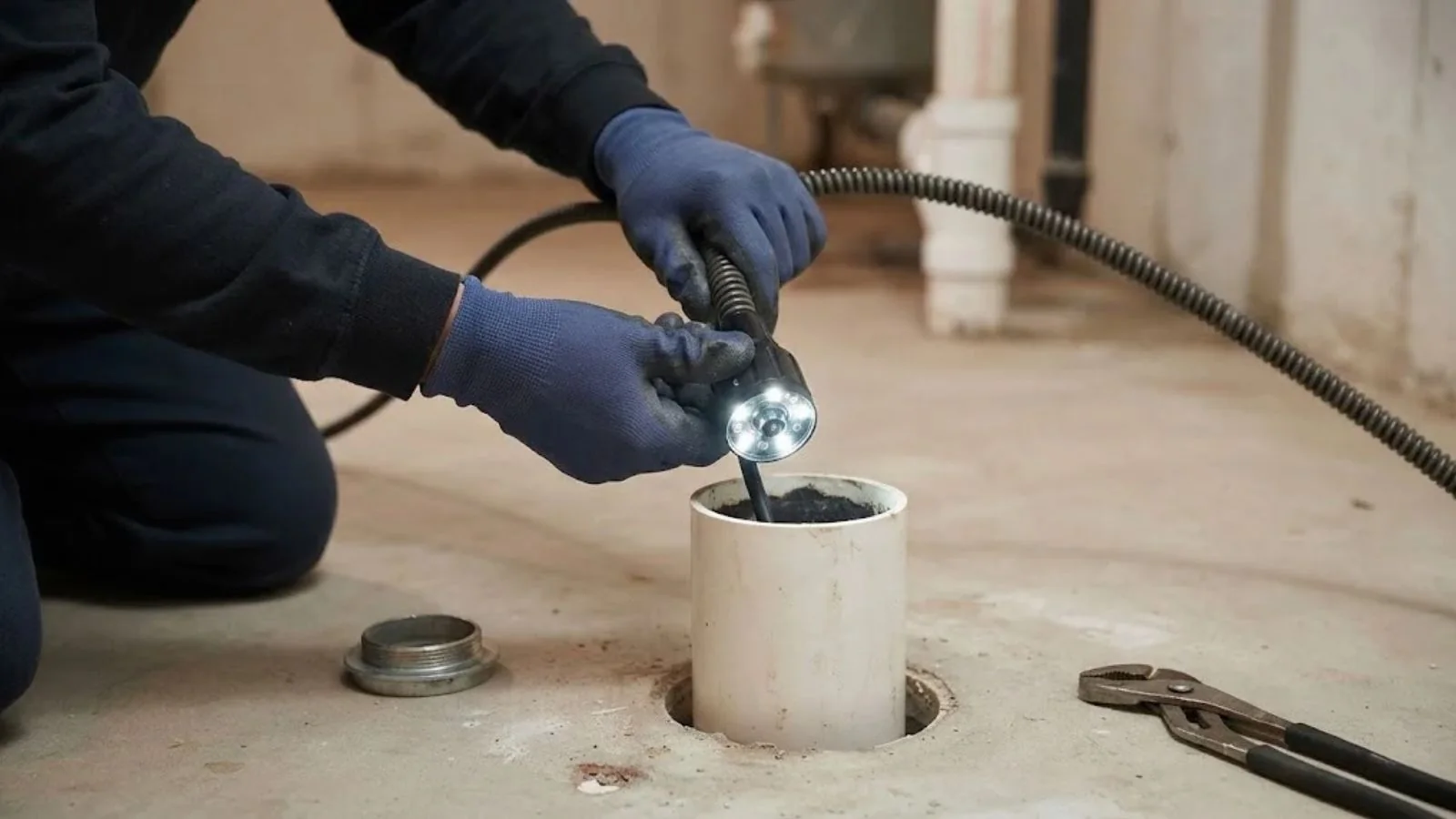
A camera on a flexible rod, run through the line
A sewer scope inspection runs a waterproof camera on a push rod from the cleanout toward the street. The camera records the pipe, the joints and the flow, and a locator on the camera head marks depth and position above ground. A recording and a short report follow.
The Town of Windsor's wastewater page says owners are responsible for the sewer line extending from their property, so what the camera finds is the buyer's problem after closing. That is the whole case for looking first.
What the camera can find and what it usually means
| Finding | How serious | Usual next step |
|---|---|---|
| Clean pipe, tight joints | Good | None, keep the recording |
| Light root intrusion at a joint | Moderate | Clean now, and monitor or repair the joint |
| Offset joint or small crack | Moderate | Spot repair, quoted from the footage |
| Sag or belly holding water | Moderate to serious | Compare repair and replacement |
| Collapsed or heavily cracked pipe | Serious | Replacement, and negotiate the price |
| Orangeburg (fiber) pipe | Serious with age | Plan replacement; it deforms over time |
Where scoping pays off in Windsor
Windsor was platted in 1882, and homes near Main Street may have clay or cast iron lines that are many decades old. Newer subdivisions have plastic pipe, but fast construction can leave sags and poorly bedded joints that appear within years. A scope helps in both cases.
The town also has mature trees in older neighborhoods, and roots are a common cause of sewer damage. A line that looks clean on a dry day can still carry root hairs at a joint, which the camera shows.
What a good report should include
- 1
Pipe material and diameter
Clay, cast iron, Orangeburg, PVC or ABS, and the size.
- 2
Distance markers
Each defect should have a distance from the cleanout.
- 3
Standard coding
Many inspectors code defects to the NASSCO Pipeline Assessment Certification Program (PACP) standard, so defects have consistent names.
- 4
The recording
Ask for the video and keep it with the house records.
- 5
Locator notes
Depth and path matter if repair is needed.
Fitting a scope into a purchase
A purchase contract sets deadlines for inspections and for raising objections. A sewer scope takes less than a day to schedule in most weeks, so book it as soon as the inspection period opens. The recording is the document you will use to ask for a repair or a credit.
If you are selling, a scope before listing removes a source of last-minute negotiation. Fix what the camera shows, or price it in. Buyers trust a house that has a recording as much as one with a clean report.
The cleanout decides how clean the scope is
A scope is run from a cleanout, a capped pipe near the foundation or in the yard. Without one, the camera goes in through a toilet flange or a roof vent, which is less clean and can miss the first stretch of the line. If the house has no cleanout, installing one before the scope is worth it, and it helps every future cleaning.
What the camera tells you about the pipe
Clay pipe appears in segments with joints every few feet, and roots find those joints. Cast iron shows scale and tuberculation inside, a rough rust buildup that narrows the bore. Orangeburg looks soft, oval or flaking. PVC and ABS look smooth and uniform, and problems with them are usually bedding or joints.
The material sets the repair options. Lining suits sound clay or cast iron with cracks, and Orangeburg usually needs replacement. The footage is the basis for every quote.
What repair and replace decisions rest on
Three things decide it: how long the damaged section is, what the pipe is made of, and whether the line holds water or has collapsed. A short defect in sound pipe is a spot repair. A line that is bellied, collapsed or fibrous throughout is a replacement.
Ask the same contractor to price both the repair and the replacement from the same footage, then compare. A bid that only offers one option is not helping you decide.
If you are selling a home with a known defect
A known defect is a disclosure item, and a recording protects both sides. Fixing a modest defect before listing is often cheaper than negotiating around it. If you do not fix it, disclose it and price accordingly.
What to do with the result
A serious finding is a negotiating point, and sellers often credit a repair or reduce the price. A moderate finding may be handled with a cleaning and a repair quote. Get the quote from the same footage, so you are comparing the same facts. The options are described under sewer line repair and sewer line replacement.
Older homes in Greeley and other established cities follow the same logic, and the City sets its own sewer rules. The rule of thumb is simple. If the house is older than the trees on the lot, scope the line.
Quick answers
Usually not. It is a separate service, and it is worth asking for.
The buyer typically orders it, though a seller can order one beforehand to avoid surprises.
Often under an hour for a typical line, longer if the line is long or blocked.
Sometimes through a toilet flange or a vent, though a cleanout is better. One can be added.