Non-Potable Irrigation Water in Windsor, CO: HOA Rules
Many newer Windsor subdivisions have a second water system that is not for drinking. Knowing who runs it saves a lot of confusion when a sprinkler line leaks.
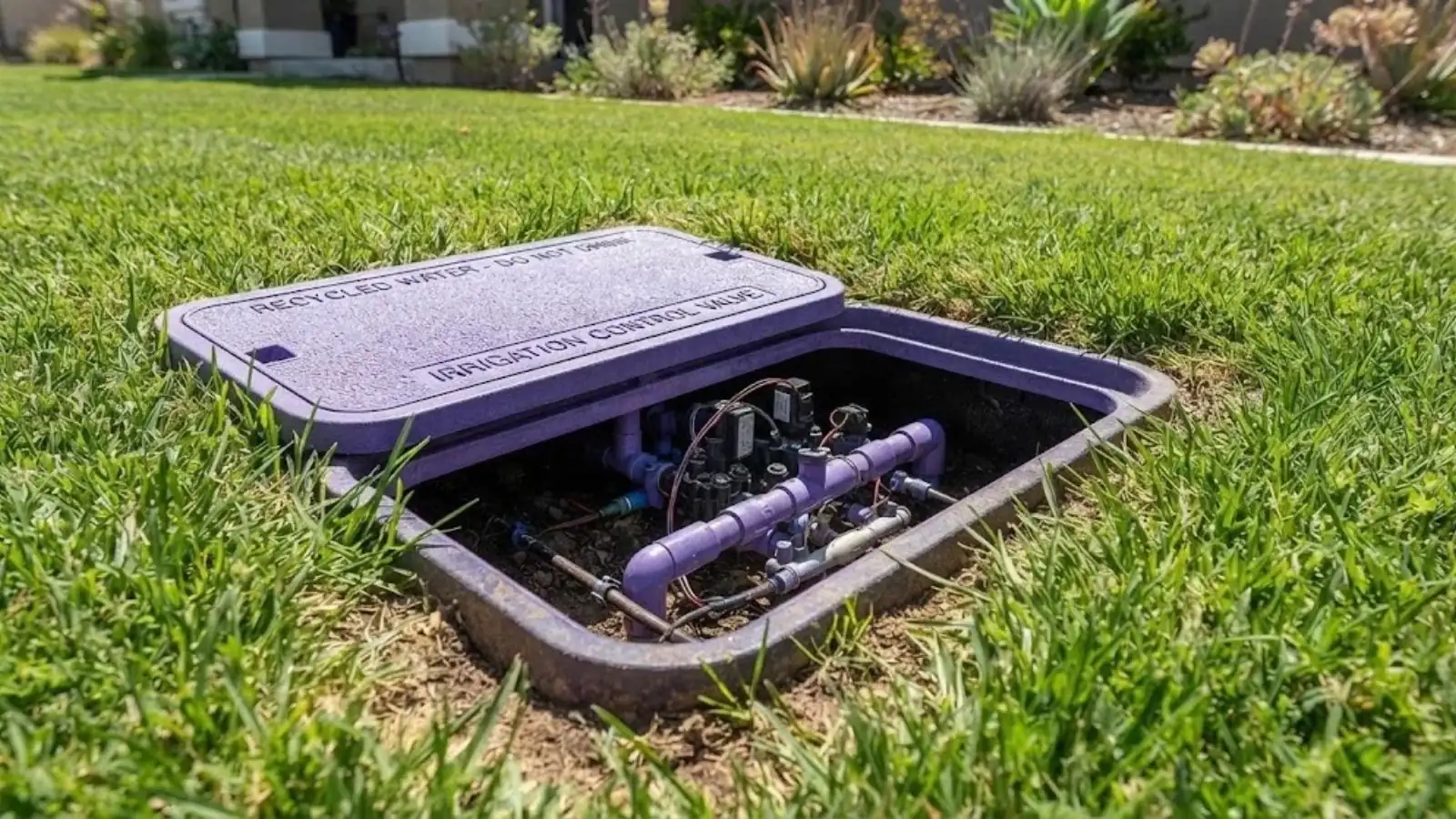
What non-potable irrigation water is
Non-potable water is untreated or partly treated water used for irrigation, not for drinking, bathing or cooking. In many newer developments, the Town of Windsor requires a secondary non-potable system so lawns are watered from a separate source and not from treated drinking water. A leak in a purple irrigation line is found like any other, through leak detection, and the repair stays on the irrigation side.
Those systems have their own pipes, valves and meter, and they are usually managed by an HOA or metro district. The Town's water and sewer maintenance staff are not responsible for turning HOA non-potable systems on or off, according to the Town's own page. For that, the Town tells residents to consult their HOA.
Who to call for which problem
| Problem | Who owns it | Who to call |
|---|---|---|
| Spring startup or fall shutdown of non-potable lines | HOA or metro district | The HOA |
| Leak on a non-potable main in a common area | HOA or metro district | The HOA |
| Leak on your own irrigation zone after the meter or valve | The homeowner | A plumber or irrigation contractor |
| Leak in the potable water line to your house | The homeowner past the meter | A plumber, see water line repair |
| Break in the Town's potable main in the street | The Town | The Town's after-hours water line, 970-674-5415 |
What to do and what not to do around non-potable water
- Never connect non-potable lines to indoor plumbing or a drinking water tap.
- Do not drink from outdoor faucets or hose bibs connected to a non-potable system.
- Look for labels, and note that non-potable lines are often purple or marked as reclaimed or non-potable.
- Keep backflow devices on irrigation current, and test them on schedule.
- Tell guests and children which spigots are not for drinking.
Why backflow devices matter on irrigation
Backflow is water moving the wrong way, from a private irrigation system into the drinking supply. A backflow preventer on irrigation lines stops it. Many providers require annual testing by a certified tester, and failed devices have to be repaired or replaced.
If your lawn system ties into potable water at all, the backflow device is the safeguard. The page on backflow testing and prevention explains the device types and the yearly test.
A typical year for a non-potable system
| Season | Task | Usually handled by |
|---|---|---|
| Spring | Startup, pressure check, valve and head inspection | The HOA or metro district, then the homeowner for private zones |
| Summer | Watching for leaks, broken heads and soggy areas | The homeowner on private zones, the HOA on common areas |
| Fall | Blowout and shutdown before the first hard freeze | The HOA or a contractor it hires |
| Winter | Nothing, unless a line was missed and froze | The HOA, with plumbers called for any interior issue |
How to tell which line is which
Look for labels. Non-potable lines and valve boxes are often marked, and the pipe or its tape is commonly purple. Outdoor spigots in some communities carry a warning tag. If nothing is marked, the HOA manager or the closing documents will say whether your community has a separate irrigation system.
When in doubt, treat an outdoor spigot as non-drinking water. The cost of the wrong guess is a stomach ache, and the cost of the right habit is nothing.
Common mistakes with irrigation water
- Connecting a non-potable hose or line to an indoor faucet or a drinking source.
- Skipping the yearly backflow test because the lawn looks fine.
- Calling the Town for a problem that belongs to the HOA.
- Leaving an irrigation line connected to a hose bib over winter.
- Assuming a soggy lawn is a potable leak when it may be a non-potable one.
Fall shutdown, in detail
Irrigation lines are drained or blown out with compressed air before the first hard freeze so water left in them cannot freeze and split a pipe. In a shared system, the HOA or metro district schedules that. In a private zone, a contractor or the homeowner does it.
Leave the controller off, drain the backflow device and disconnect any hoses. A line that was missed shows up in spring as a geyser. If you see one, close the zone valve if you can and call the HOA before assuming the potable system is at fault.
Reading your own irrigation clues
A zone that runs weak often has a broken head or a leak downstream. A soggy patch that never dries points to a buried leak. A pressure drop across the whole system suggests a main problem that belongs to the HOA. Walk the zones in daylight, with the system running, and photograph what you see.
Photos and notes make the HOA's repair faster, and they help a plumber if the leak turns out to be in the potable line after all.
Where this shows up in practice
The pattern is most common in the newer parts of town and in surrounding growth areas such as Severance. A summer bill spike or a soggy lawn is the common signal. The first question is whether the water is potable or non-potable, because that decides who owns the repair. If you are not sure, your closing documents or your HOA manager can tell you.
Quick answers
Not unless you know it is potable. If your community has a non-potable system, outdoor spigots may be connected to it and should not be used for drinking.
If your subdivision uses a shared non-potable system, the HOA or metro district does. The Town does not.
Not on the potable bill if the systems are separate. If your irrigation is on potable water, a leak shows up on your bill.
Many providers require a yearly test. Ask your provider or HOA which applies.