Frozen Pipes in Windsor, CO: What the 30-Inch Frost Line Means
Windsor's code sets the frost line at 30 inches, which protects buried mains. It does nothing for the pipes above that line, and those are the ones that split.
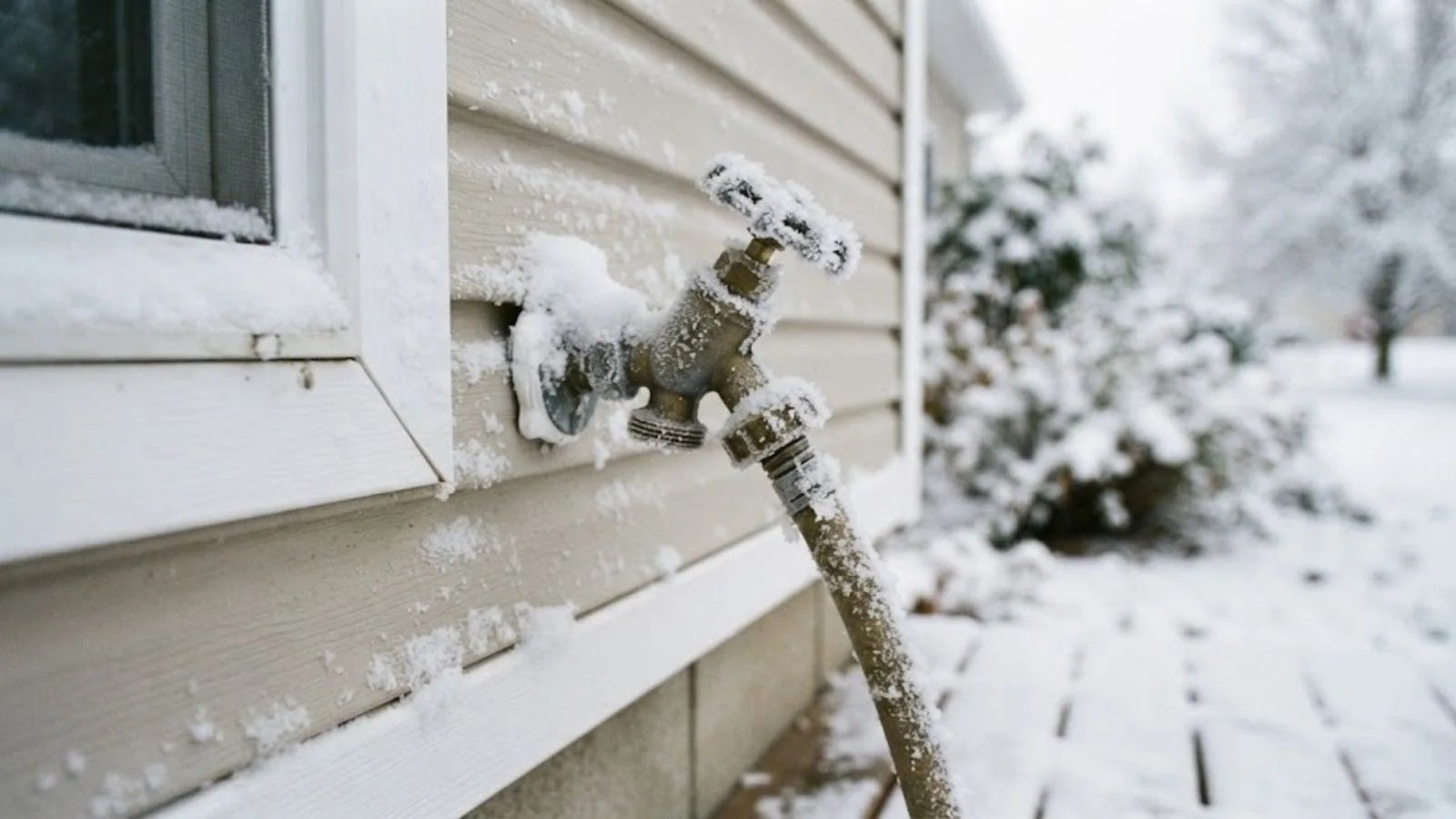
What a 30-inch frost line does and does not do
Frost depth is how far below the surface the ground can freeze. Windsor's building code sets it at 30 inches, so buried water mains and service lines are normally placed below that depth. They are protected by the soil above them.
Pipes above that depth have no such protection, and the International Plumbing Code (IPC) says as much by barring water pipes from exterior walls, attics and crawl spaces unless they are protected from freezing. Hose bibs, garage runs, lines in exterior walls and crawl space pipes sit in air that can drop below freezing, and the frost line tells you nothing about them. That is why the number comforts utilities and does not help a homeowner on a cold night.
Why Windsor's weather is hard on pipes
Climate records for the area describe Chinook winds that can push January and February temperatures close to 70 degrees, and fast reversals that turn a mild afternoon into a hard freeze by morning. A swing of 50 degrees between the afternoon high and the overnight low is not unusual in spring and fall.
That pattern catches people out. A mild week lowers your guard, hoses stay connected, and the first hard night after it is the one that splits a pipe. The practical rule is to prepare for the freeze that follows a warm spell, not the one you already had.
Cold-night actions by situation
| Situation | Risk | Action |
|---|---|---|
| Hoses still connected to outside faucets | High, since water in the hose freezes back into the pipe | Disconnect hoses and drain them before the first freeze |
| Garage with plumbing on an outside wall | High on a night with a hard freeze | Keep the garage door closed and add heat if the forecast is severe |
| Sinks on an exterior wall | Moderate | Open the cabinet doors so room air reaches the pipes |
| Crawl space or unheated room | Moderate to high | Close vents and insulate the pipes |
| Away from home during a freeze | High, since nobody can react | Keep the heat on, or shut off the main and drain the lines |
A fall checklist for Windsor homeowners
- Disconnect and drain every hose and shut off interior valves to outdoor faucets if you have them.
- Insulate exposed pipes in garages, crawl spaces and exterior walls with foam sleeves.
- Seal drafts around pipe penetrations with caulk or foam.
- Know where your main shutoff is and make sure it turns.
- Keep the heat at 55 degrees or higher when you travel.
- Have sprinkler lines blown out, or confirm your HOA has scheduled it.
What to do when a pipe freezes
If a faucet gives a trickle or nothing on a cold morning, open it, find the frozen section, and warm it gently with a hair dryer or warm towels, starting nearest the faucet. Never use an open flame, a torch or a heat gun. If you see a split, close the main shutoff right away.
A pipe that has already split is a burst pipe repair job, and a pipe that is frozen but intact is a thaw, covered under frozen pipe repair. If water has spread, drying matters more than the repair, and the clock is short.
What insulation does and does not do
Foam pipe sleeves slow heat loss. They do not create heat, so a sleeved pipe in an unheated space with no heat source will still freeze if the cold lasts long enough. Insulation buys time. It works best on pipes that run through spaces that are cold but not extreme, such as a garage with some air leakage.
Sealing air leaks matters as much as wrapping pipes. Cold air blowing across a pipe through a gap in a wall can freeze a section that insulation elsewhere would protect. Foam or caulk around the pipe where it passes through the wall is a small fix with a large effect.
A note on heat cable
Electric heat cable can protect a vulnerable run, but it needs care. Use only UL-listed products, install them exactly as the manufacturer directs, and never overlap the cable on itself. Replace any cable with damaged insulation. A cable that is not plugged in or has failed gives no warning, so test it each fall.
Leaving the house empty in winter
- Keep the thermostat at 55 degrees or higher.
- Open cabinet doors under sinks on exterior walls.
- Ask a neighbor to check the house if a hard freeze is forecast.
- For long absences, close the main shutoff and drain the lines.
- Know who to call if a pipe bursts while you are away.
Safety while you thaw
Close the main shutoff before you start thawing, so a split pipe does not flood the house the moment the ice melts. Keep the faucet at the pipe open so melting water has a place to go, and watch for drips along the pipe as it warms.
Keep electrical cords and space heaters away from wet areas, and never leave a heater unattended near a frozen pipe. If you cannot find the frozen section within an hour or two, or a pipe in a closed wall is the suspect, stop and call. Guessing inside a wall is how a thaw turns into a flood.
Newer homes are not immune
Homes in newer subdivisions in places like Severance can have builder-installed pipes in garage walls and exterior-facing kitchens that were fine in mild winters. Insulation quality varies, and a cold snap shows where it was skimped. A check in October is cheaper than a repair in January.
Quick answers
A slow drip on exterior-wall lines keeps some water moving, but it is a precaution and no promise. Insulation and heat do more.
A properly buried main is protected. The pipes inside the house and in garages are the ones at risk.
A sudden burst from a freeze is commonly covered, and policies often expect reasonable steps to prevent it, such as keeping the heat on. Read your policy before winter.
55 degrees is a commonly recommended minimum. Open cabinet doors on exterior walls as well.