Basement Plumbing Problems in Northern Colorado Homes
Basements hold the lowest fixtures and the first signs of trouble. The cause is usually one of five things, and soil is part of the story.
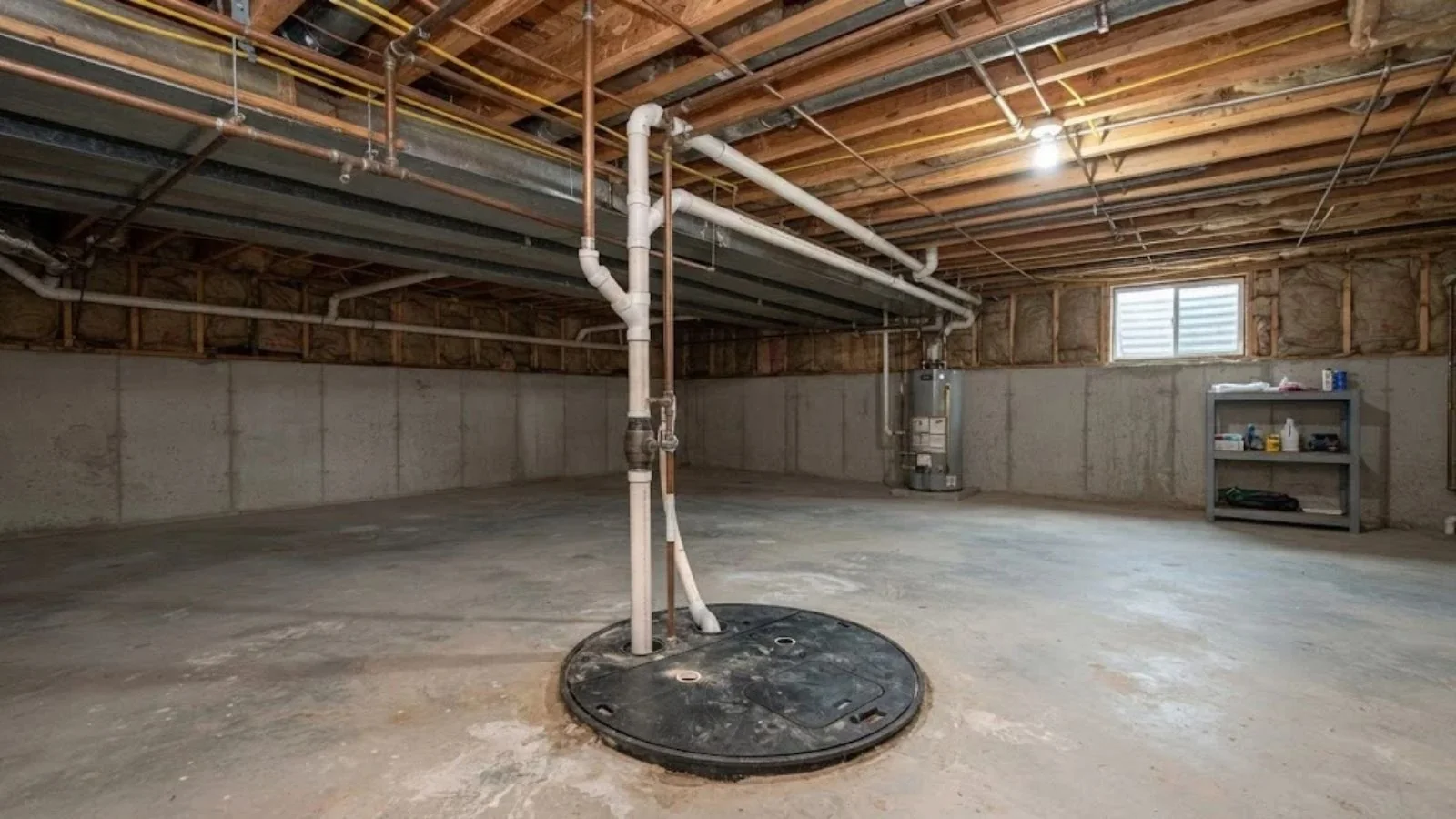
Why basements show plumbing problems first
A basement is the lowest point of the plumbing system. Sewage backs up there first, groundwater arrives there, and leaks from upstairs drip into it. A smell, a damp patch or a pump that runs too often is usually a message from the rest of the house.
Basements are common in Windsor and across Northern Colorado, so the same few problems repeat. Knowing them saves a lot of guessing.
Five common basement plumbing problems
| Problem | Usual cause | Typical fix |
|---|---|---|
| Smell from the floor drain | A dried-out trap or a vent problem | Refill the trap and consider a trap primer |
| Sewage at the floor drain | A blocked main line | Clear the line and inspect it |
| Sump or ejector pump failure | Power loss, stuck float or dead motor | Repair or replace, and add backup power |
| Damp walls and stains | A leak above, or groundwater | Leak detection and a moisture check |
| Cracked or shifting pipes | Soil or foundation movement | Repair and reduce stress on the line |
What soil has to do with it
The Colorado Geological Survey identifies expansive soil as a major geologic hazard in the state. Clay that swells when wet and shrinks when dry moves, and a foundation, a slab or a pipe passing through a wall moves with it. Over years, that can crack drain lines or loosen joints.
Whether a specific lot is affected is not something a general article can say. It is a matter for the footage, the repair history and a look at the house. The practical advice is to keep gutters and downspouts discharging well away from the foundation, so the soil beside the house stays evenly moist.
Sump pumps and ejector pumps are not the same
A sump pump moves groundwater from a pit under the slab and sends it outside. A sewage ejector pump lifts waste from basement bathrooms or laundry up to the sewer line, in a sealed and vented basin. They are separate machines with separate discharge lines, and mixing them up causes failures.
The Town of Windsor's rules say that where a building drain is too low for gravity flow, sewage must be lifted by an approved means, and that groundwater and roof runoff cannot go to the sanitary sewer. The International Plumbing Code (IPC) adds that every trap must keep a water seal, which is why an unused floor drain starts to smell. Details are covered on the page for sump pump installation and repair.
A basement plumbing check before the wet season
- Pour water into the sump pit and confirm the pump starts and shuts off.
- Check the discharge line is clear, directed away from the foundation and not frozen.
- Pour a gallon of water into each floor drain to refill the trap.
- Look at the water heater for a drain pan and a clear relief valve discharge.
- Check pipes and walls for damp spots and stains, and photograph them.
- Make sure the main shutoff turns freely.
Window wells, downspouts and grading
Many basement water problems start outside. Downspouts that dump next to the foundation, soil that slopes toward the house, and window wells that fill with debris all send water to the basement walls. None of that is plumbing, and all of it can look like plumbing when a floor drain overflows during a storm.
Extend downspouts several feet away from the house, check that the ground slopes away, and keep window wells clear. Those steps cost little and take pressure off the sump pump.
The water heater in the basement
Most basement-heater leaks do little damage because there is a floor drain nearby. The risk is in finished basements, where a leaking tank soaks carpet, drywall and stored items. A drain pan with a line to a floor drain or sump, and a water alarm on the floor, are cheap protection. Replace a heater before it fails when it passes about ten years, and see the page on water heater installation and replacement for the details.
Planning a basement bathroom
The first question is where the sewer line sits relative to the basement floor. If the house drain is lower than the basement fixtures, the waste can flow by gravity. If it is higher, a sewage ejector pump is needed. The Town of Windsor's rules require that sewage in that situation be lifted by an approved means.
The next questions are the slab, the venting and the permit. Cutting concrete for new drains adds cost, and every fixture needs a vent. Adding a fixture generally needs a Town permit, so ask the permit technician at 970-674-2436 before you start.
A note on radon and basement openings
Much of Colorado is rated high for radon, a naturally occurring gas that enters homes from the soil. Sump pits and floor drains can be entry paths. A sealed, gasketed sump lid and trapped drains reduce the pathway, and a radon test is cheap. If you finish a basement, test first.
What this means in a river-valley town
In river-valley towns such as Johnstown, groundwater and flood seasons add to the list. Basement plumbing work there leans toward sumps and backup power. A broader look at basement drains, ejectors and bathrooms is on the basement plumbing page.
Quick answers
The trap has probably dried out. Pour water into it. If the smell returns, a vent or sewer issue may be the cause.
Hairline cracks are common. Wide, growing or stair-step cracks deserve a look from a foundation professional.
Sometimes. Leaks, condensation and groundwater all cause dampness, and a moisture check separates them.
Usually. The sewer elevation, the slab and the permit decide whether you need an ejector.